


Dr Lisa Hutchinson
Lights, Camera, Action!
In a recent zoom meeting for ACHES, Asif Naqvi (5GinMerton.com) gave a presentation that articulated very carefully the glaring truth about the issues with our streetlights. The talk title was “Lights, Camera, Action!” He explained that the preference of Merton Borough Council is for LED street lighting to be a ‘neutral white light’ source. The council states that this is the most efficient light in terms of energy saving and carbon reduction, since white light is incisive in the dark, and neutral white light provides a good colour contrast, which is good for drivers and pedestrians. The council also states that the ‘directionality’ of LED light coupled to an array of lenses ensures that the light is carefully controlled and well absorbed by the road surface. In Merton, the streetlights are dimmed by 25% between 8pm to 11pm, followed by 50% dimming from 11pm until dawn. It is claimed the impact to the retina of the blue type light from street lighting is minimal and not really experienced by road users because it is directed at the road surface. The council indicated we should be more concerned about powerful LEDs and blue lights emitted from different devices; although such devices expose our retinas to harmful rays, steps can be taken to mitigate against such harms, unlike with harsh LED streelighting.
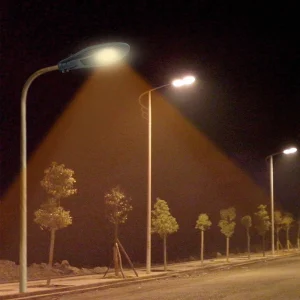
Importantly, LED lights tend to focus light, and streetlights – as currently deployed in many boroughs – are not being diffused properly or spread. This creates areas of brightness and then sudden drop-off in light intensity, which is known as the ‘zebra effect’. This is quite confusing to the brain; yet, with proper diffusers, this effect could be mitigated. Unlike other forms of lighting, LEDs are highly directional, with light emitted in an arc around 60 degrees, rather than the 360 degrees common in other lighting. LED light is usually emitted from a small, flat surface. Consequently, the vast majority of LED luminaire designs suffer from the drawback of attempting to illuminate wide areas, a distance away from a small, flat light source. This means that LED lights cast a much narrower light band (see below figure) than regular lighting, creating a non-uniform luminescence.
Inferior Light Quality
The light quality in streetlights has not been given sufficient attention. Asif asked Merton Borough Council if LED lights produced a warmer light source how much less energy-efficient would it be? This is a logical question because LED streetlights are already using yellow phosphorus to make the blue light appear white, something that slightly reduces efficiency, yet the light quality is still harsh. Local authorities have been replacing mercury and sodium street lights with LEDs. If this was done purely on the basis of energy efficiency and cost, the installations would not be fit for purpose, as highlighted on page 67 of the Chief Medical Officer’s 2017 Annual Report. Furthermore, if the light used is harmful regardless of its energy efficiency, surely this would make measuring its efficiency futile. Neutral white light LEDs may not be the most energy efficient solution anyway: blue/white light LEDs consume 80–120 lumens per watt, amber light LEDs consume 60–110 lumens per watt, and high-pressure sodium lights use 80–120 lumens per watt. A sample of five LED streetlights were installed on lamp posts in the town of Golden in the USA so residents could experience for themselves the quality of different lights, and they were asked which light they preferred. The warmer light option, illuminating a greater area (diffusion) was the clear winner. This is a relatively inexpensive thing to replicate in our towns. A lot of the blue light produced by LEDs is not useful and is harmful for human vision and, unsurprisingly, doesn’t feel pleasant either.
Interestingly, a French government report published in 2013 indicated that a luminance level higher than 10,000 cd/m2 causes visual discomfort whatever the position of the lighting unit in the field of vision. As the emission surfaces of LEDs are highly concentrated point sources, the luminance of each individual source can be 1000 times higher than the discomfort level. Crucially, the level of direct radiation from this type of light source can easily exceed the level of visual discomfort. To reduce costs, some councils have specified small luminaires that result in high glare. Modulation and strobing of LEDs is another issue, as LEDs vary in their degree of flicker; cost is the only barrier to flicker-free LEDs. The Swedish Government has calculated that the cost of eliminating flicker is equivalent to around 10 pence per LED unit. The effect of flicker can also disrupt the movement control of the eyes, resulting in discomfort and headaches in some people. Flicker stresses the nervous system and rapid changes in light subconsciously activate the ‘alarm’ system within people, leading to anxiety and stress. For people exposed to flicker and suffering migraines, they might also experience dizziness and pain. Flicker doesn’t only affect people; chickens do not lay eggs when exposed to the stress caused by flickering light. Checking for flicker is relatively simple with a video camera, and apps are available to allow users to measure the degree.
Health Effects and the Elderly
The effect of LED lights on older people in our communities is particularly pronounced. Drivers emerging from an unlit area into a pool of light, causes contraction of the pupil to adjust to the brighter light. As drivers enter a dark area, the dilation of the pupil is slower, creating vision impairment. Eye adjustment recovery times are slower in an older person, exacerbating vision impairment. This contributes to increased social isolation because many older people choose to not drive at night. On a related note, lighting also affects our circadian physiology that can lead to serious health consequences. Insufficient light during the day and excessive light exposure during the night disrupts the human circadian system and deleteriously affects mood and immunity. The suppression of melatonin is a marker of circadian disruption, which includes disrupted sleep and might contribute to the rise in conditions such as cancer, diabetes, and heart disease.
Asif delved into the science further and discussed how many LED streetlights have a spectrum containing a spike at the wavelength that most effectively suppresses melatonin levels at night time. In the case of white LED light, it is estimated to be five times more effective at suppressing melatonin at night compared with sodium lamps of comparable light output. The American Medical Association (AMA) statement recommends that outdoor lighting at night should not exceed a colour temperature of 3000 Kelvin (K). Colour temperature is a measure of the spectral content of light from a source. A 4000 LED has a spectral power distribution consisting of a sharp peak of blue wavelength light, with very little red light. Studies have shown that increased LED lighting risks harming both human and animal health. Public Health England has even issued LED street lighting warnings whereby high levels of blue LED lighting can be uncomfortable and is known to cause damage to the retina. Similarly, a survey of drivers shows that the glare from vehicle headlights affected 89% of motorists. The Government Highway Safety Association 2022 report between 2010 to 2022 has shown that pedestrian fatalities by State that occurred at night have increased by 77.7% since 2010 compared with 18.8% during daylight hours.
Time for a Different Approach
In summary, things we need to consider to make a positive impact could include the following considerations. Has a risk-assessment or optical radiation environmental assessment been done with the newer LED streetlights? A Freedom of Information request in Lincoln city council suggests this is not the case. Councils have not undertaken a health impact assessment prior to introducing LED street lighting. Moreover, councils did not undertake a disability impact assessment, but they have conducted a Equality Impact Assessment. It is unclear what the cumulative Kelvin output of these LED lights is, so it would be helpful to know who the decision maker is so we can discuss these issues further. Some progress has been achieved: Asif highlighted one lady who successfully got the council to revert the street lighting near her to sodium lights. Letters from medical professionals, such as consultant neurologists and ophthalmologists may be helpful.
An Equalities Officer has used the Equalities Act to explain legal grounds for retaining sodium street lights as ‘reasonable adjustment’. A resident in Manchester engaged with his council and after initial dismissive responses, they accepted there were health problems and offered to make some changes, which included altering the 4000K LEDs to 3000K with better quality diffusers to reduce the glare and pulsing effects. However, something needs to be done on a national scale because there are clearly issues with LED technology that are not fully understood. Asif has found that the Council’s Equality Office and local councillors can be very supportive.
Disturbingly, LED lights may be spying on people covertly by sending audio data to a central computer that records all conversations. A New York Times article reported that 171 LED fixtures inside Terminal B of the Newark Liberty International Airport were ‘watching’ passengers. Surveillance rather than energy efficiency is the real reason for this technology. We encourage readers to contact their local councils if they have concerns about streetlights and the harms to human health. If you have a doctor’s report confirming an eye condition that is aggravated by the kind of lights emitted from streetlights then you have a strong case to have changes made. As always, collaboration is a huge asset; if there is a group of concerned individuals that work together, it can really get things moving in the right direction.