


Dr Lisa Hutchinson
Opposing Digital ID
In the past few weeks, ACHES has written frequently about dangers of ushering in Digital ID, as well as the health harms caused by smart meters. In this post we explain both aspects and the steps ACHES is taking to prevent such unlawful and unjust authoritarian measures. ACHES has written to the Home Secretary and Home Affairs Select Committee to clarify and reiterate our position relating to Digital ID. ACHES is fundamentally opposed to the Digital ID proposal, based not only on legal concerns, but in relation to the following: respecting privacy, the unlawful nature of retaining a person’s DNA or biometric data, and that facial recognition is unnecessary and disproportionate. How would people’s data be stored and used?
Many Reasons to Say No
The proposal of a ‘digital-only’ requirement is not only discriminatory, it is also disproportionately burdensome on older citizens and those with disabilities.
Children’s rights should also be protected under Article 16 of the UNCRC and Article 8 of the ECHR. Extending compulsory ID to children would multiply the breaches of potentially mishandling pupils’ biometrics across the nation. Under the Magna Carta in 1215, no free man should be treated as suspect by default. Further, the Bill of Rights from 1689 forbids arbitrary executive power. More recently, the Protection of Freedoms Act in 2012, requires that the storing of innocent DNA be removed. The unpopularity of the proposal to introduce Digital ID cards is reflected in the whopping 2.9 million signatories on the government petition against Digital ID (which has amassed 2,910,817 as of writing this post).
Not so ‘SMART’ meters
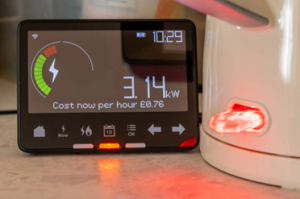
Regarding smart metres, these operate on pulsed microwave radiation, and many scientific papers have demonstrated the deleterious effects of such radiation. As noted, the government relies on ICNIRP (International Commission on Non-Ionizing Radiation Protection) an international body of independent scientific experts for the safety of the public in relation to technological infrastructures. In general, microwave radiation is referred to as EMF (electromagnetic field) radiation. Some of the non-ionizing radiation effects of EMF are not considered by ICNIRP; thus, people with metallic objects could be harmed by EMF radiation, emitted by smart meters.
ICNIRP Guidance
“Indirect effects – most health effects considered in non-ionizing radiation protection are direct effects. However, health effects can also arise from indirect pathways. For instance they may occur from an electric discharge arising from metallic objects charged by exposure to some types of non-ionizing radiation; these types of indirect effects are considered by ICNIRP.” The quote continues:
“Other types are not, for example, heating of metallic objects in the body, such as prostheses, or an influence on the operation of medical devices such as pacemakers. The latter electromagnetic interference effects are of a technical nature and do not fall within the remit of ICNIRP.”
“Medical procedures may utilize EMFs, and metallic implants may alter or perturb EMFs in the body, which in turn can affect the body both directly (via direct interaction between field and tissue) and indirectly (via an intermediate conducting object). For example, radiofrequency ablation and hyperthermia are both used as medical treatments, and radiofrequency EMFs can indirectly cause harm by unintentionally interfering with active implantable medical devices or altering EMFs due to the presence of conductive implants.” The ICNIRP guidance also has the following: “Radiofrequency EMFs may also interfere with electrical equipment more generally (i.e., not only implantable medical equipment), which can affect health indirectly by causing equipment to malfunction. This is referred to as electromagnetic compatibility, and is outside the scope of these guidelines“
Many studies have studied oxidative stress, which is a widely known precursor to cancer. “In many of these studies, oxidative cell stress is identified as the mechanism of action; the effects are athermal, i.e. they are observed below the threshold of thermal damage”. ICNIRP considers thermal metrics; however, for many years nanoparticulate metallic substances have been included in vaccines and similar nanomaterials are in dental anaesthetics. Many people have metal fillings, dental implants or metallic components in their bodies, such as hip replacements or metal plates. Therefore, such people fall outside the remit of ICNIRP.
A huge proportion of the British population fall outside the remit of ICNIRP and so must be considered accordingly in terms of protection from microwave radiation, which is emitted by smart meters. In the United States, the Health Secretary, Robert Kennedy Jr, has stated that EMFs are recognised as environmental stressors. Electromagnetic radiation from wireless technologies is a chronic environmental toxin, alongside pesticides, plastics, and air pollutants. Crucially, children are especially vulnerable due to their thinner skulls and developing nervous systems.
Collectively, for the reasons stated above, clearly the government cannot make smart metering compulsory. The government is aware of this information because it relies on ICNIRP for public safety protection. The public need to be fully informed of the ICNIRP limitations with regard to pacemakers and similar metal devices, so that they can knowingly participate in the consultation. To make smart meters compulsory in light of the ICNIRP statements above and in full knowledge, would be nonsensical.